Friday, June 29, 2012

Friday, June 29, 2012

Working with HTML

Take a look at this page.  Thrilling, right?

This page is an example of HTML.  We're so used to colorful, dynamic pages, but those cannot be created by HTML alone.

On our route to creating amazing pages, we're going to need to learn multiple web languages.

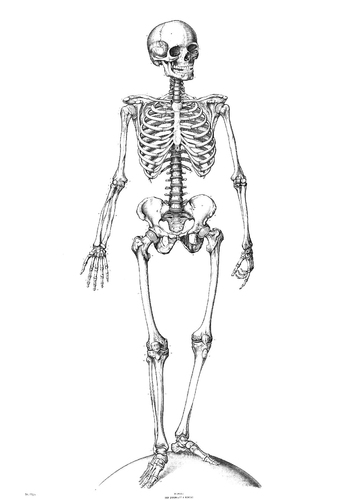
HTML alone provides a nice skeleton for a web page, but it doesn't *do* anything.  In order to provide calculation and movement, we must add muscles and organs...in this class, those are accomplished with JavaScript.

Even the strongest body looks a little off without skin.  We equate CSS to the skin, hair, and clothes.  CSS allows us to style our page in a way that looks enticing and professional.

Using a combination of HTML, JavaScript and CSS, we can do many amazing things.

Thursday, June 28, 2012

Thursday, June 28th, 2012


What is TCP?

Why is TCP paired with IP?

TCP/IP is very handy, but how do we know where the data is going in the first place?  Well, we read the URL, of course.  The URL delivers us right to the exact location of the final HTML file.  In order to create a URL, we need to understand the file structure of the internet.  This hierarchy is important for proper network organization.

What is a hierarchy?

Imagine a workplace with a CEO who oversees Managers, then the Managers oversee Supervisors.  Finally, Supervisors oversee the workers who provide the actual content.  Even more similar is the structure of our computer hard drives.  What part of our computer would be the CEO?  What would the Managers be? How about the Supervisors?  The Workers?  Now, translate that one more little bit to a web server.  Now, the domain server is the CEO.  It's at the top level.  The name servers are next, followed by the folders and finally the working files.

This hierarchy structure is repeated frequently in computer science.  You'll see it more as we start to talk about HTML, XML and even in some algorithms.


Additional Links for this Session


HTML Hierarchy

Tree Structure

Tuesday, June 26, 2012

Wednesday, June 27th, 2012


What is an IP address?

Why do we need DNS Root Servers?

Look at the list of top level domains in Snyder on page 67.  Can you find your initials?  What country do you stand for?  Where is the top level domain in the URL hierarchy?

So, now that you know that data is shipped all over the Internet, even between countries, you may be wondering how information gets back to you without getting lost.  The truth is, it doesn't.

Information is getting lost all the time.  Fortunately, many protocols have been developed to limit the damage caused by dropped packets.  There are protocols for times when data is more important than speed (TCP) and protocols for when speed is more important than data (UDP).

The average webpage request is processed over TCP.  This means that a message is broken up into tiny pieces and shipped off in different directions.  Often, most of the pieces take different routes to their destinations, so we have to label them very well to make sure they all get to their final destination.  If the sender doesn't receive confirmation that a given packet has made the journey, it will send a replacement.


Additional Links for this Session

Grace Hopper Describes a Nanosecond


Tuesday, June 26th, 2012


Well, now that you know how the internet came to be, it's time to learn how it works.  We're all familiar with typing a url into our address bar and being whisked away to our favorite websites.  What you may not realize is that there's actually a lot more to it than that.  In order for your computer to get to the information it needs, it goes through several steps; one of which is a DNS lookup.  This process explores several client/server relationships along the way.  (Insert Client/Server game here)

This is all just one long-winded way of saying that information transportation isn't magic.  There's a lot of choreography that goes in to getting your computer to dance.


Additional Links From Today

DNS Lookup Route

TraceRoute Service

Sunday, June 24, 2012

Monday, June 25th, 2012


Welcome to CIS110.  This will be a very intense (and hopefully entertaining) summer series.  You should plan on at least 5 hours of reading and 10 hours of homework each week outside of class.  


Cheating is absolutely not tolerated. Neither is disrespect or condescension.  This is a difficult subject and the best way to learn it is as a team.  Here is what I expect. This is what the University expects


Your book should be in-stock at the UO Bookstore.  We'll be following it pretty closely, so please try to read the chapters before the day that we reach them in class.


Now that we have all of that out of the way, let's get started! These are exciting times.


___________


In the beginning, there was light.  Well, actually, in the beginning there were phone lines, and light came a little bit later ... at least as far as the Internet is concerned.

That's right.  The beginning of the Internet happened over an infrastructure that was little more than sending morse code by wire.  Today's Internet is only slightly more complicated, utilizing standardized technology and fiber-optics, but the  payoff has been amazing.  You may not be very familiar with the history of the Internet, except to hear others say that Al Gore claimed to invent it. Gore was, in fact, an important part of the Internet's development. He was inducted into the Internet Hall of Fame as "Instrumental in helping to create the 'Information Superhighway,' Gore was one of the first government officials to recognize that the Internet’s impact could reach beyond academia to fuel educational and economic growth as well."


Additional Links From Today

Out with a Bang!

Sunday, June 17, 2012

Welcome!


Welcome to CIS110 12U B!  That's a shorthand way of saying that you are in the second daily session of CIS110 for the summer of 2012.

Classes will be held Monday through Friday from 2 to 3pm, between 6/25 and 8/15 (with the exception of Wed, 7/4).

Please remember that attendance is MANDATORY as we'll be flying through this material at warp speed.  I promise to make it entertaining, if you promise to pay attention :)